
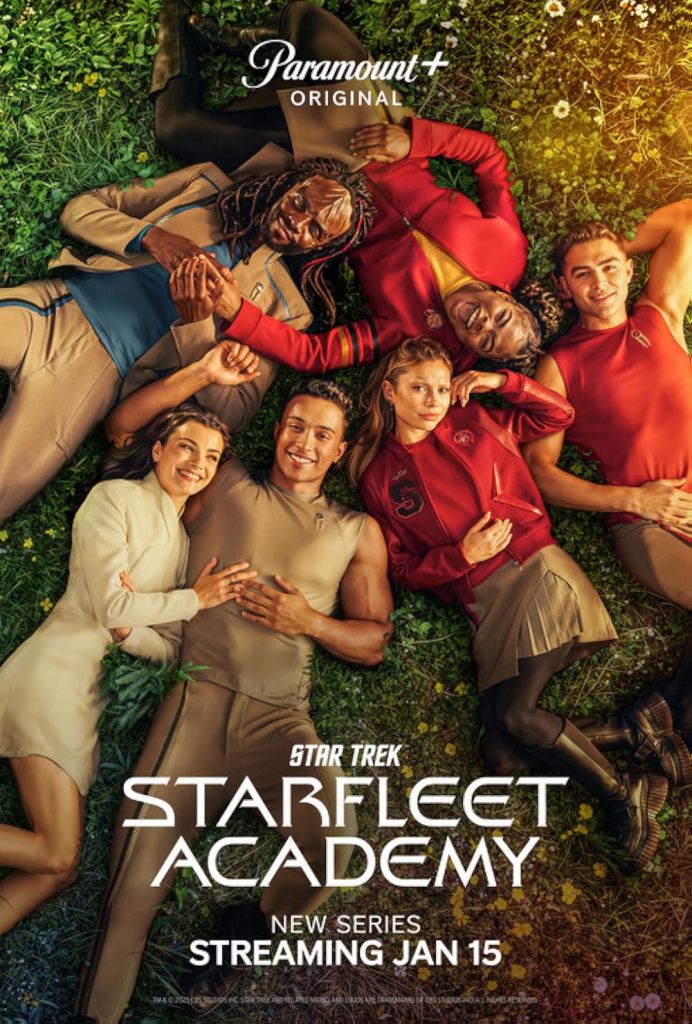
Dawson’s Trek? More evidence that modern sci-fi has gone far too woke? Or is it actually genius?
I love it when people moan about Star Trek going “woke”. Why does it have to be political? Why can’t everything just be like it was in the old days when I enjoyed watching non-PC Captain Kirk shooting the bad aliens and, err, tackling space Nazis, or uncovering the madness of racism, war, slavery and hippies with terrible taste in music?
(And that was just the original 1960s series. If you don’t like Woke Trek, you probably won’t like any of the Next Generation’s stories about the quality of life people can have if they overcome greed and self-centredness, or any of Deep Space 9… at all.)
Starfleet Academy is fully woke to the possibility that there’s a bright future ahead where people don’t really make a big deal out of other people being gay
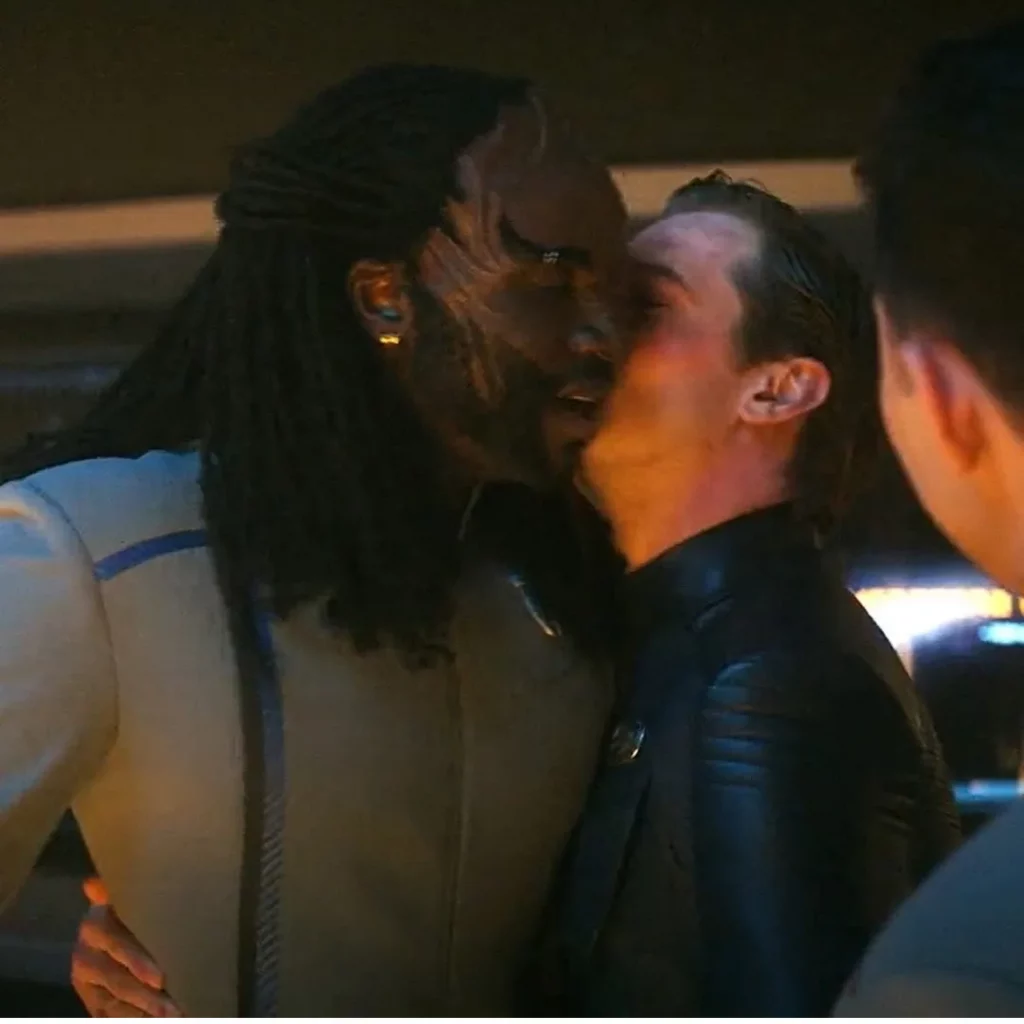
and/or mixing clothes we might find a bit gender-specific
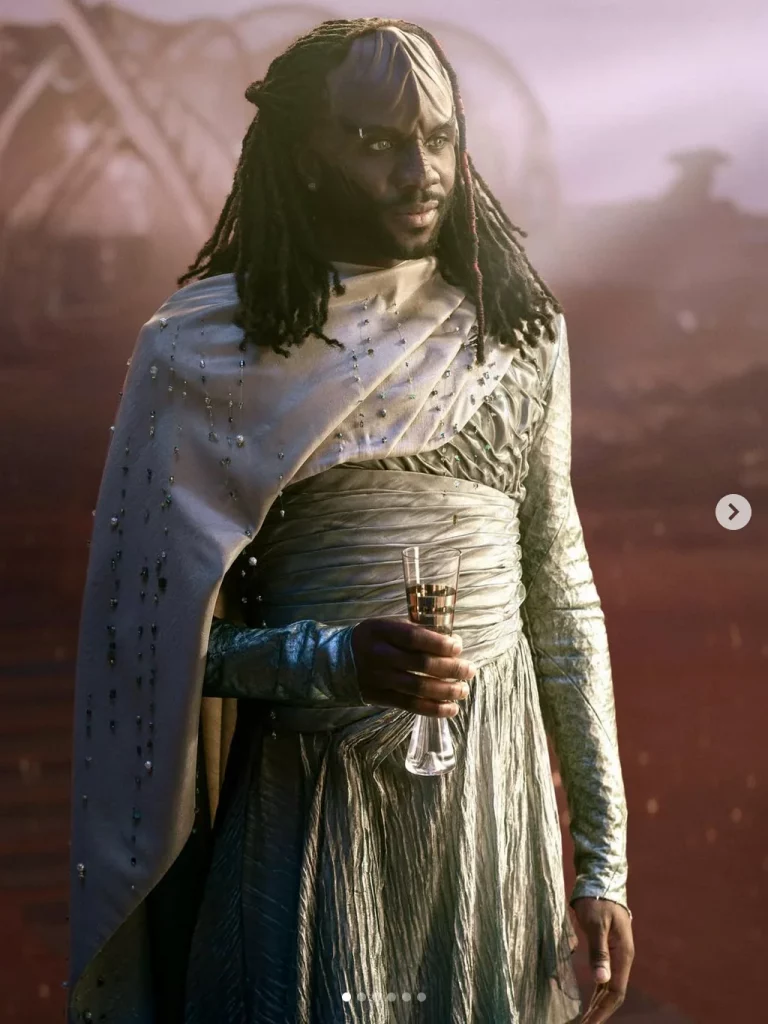
and/or not necessarily being organic life at all but still being intelligent, interesting and someone you’d quite like to be friends with.
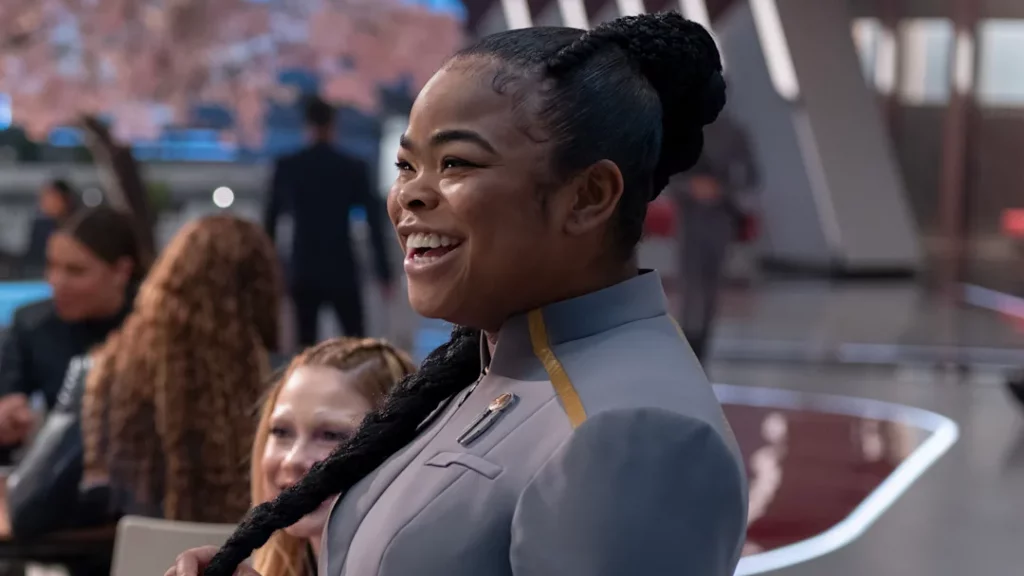
This show brings all of that along with a character who is outwardly tough but, when given a banana, literally vomits rainbow glitter.
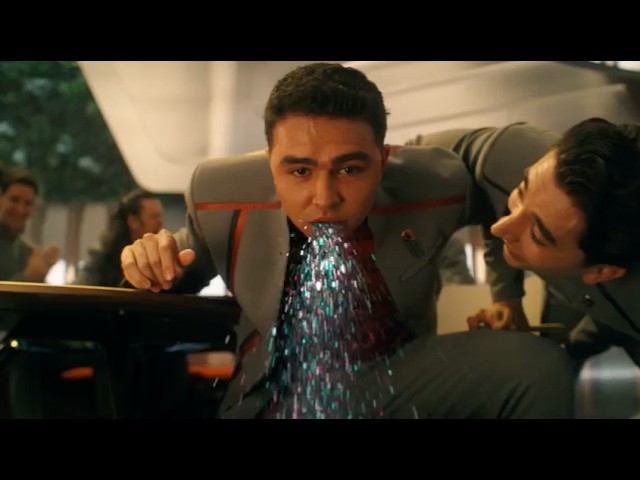
Do you think the writers are making a point here? I do, and I’m cheering them on.
With that all said, the question still remains about whether or not all this attention-grabbing malarkey can be used in the service of great stories. That’s the difference between going woke and going broke.
The series isn’t finished yet. I’ll add more when it wraps up. So far, as with most sci-fi and Star Trek in particular, I’m finding it the most interesting when it settles down from “we have some big ideas to share with you!” mode and enters character-driven deep dives through stories that only sci-fi can tell.
The characters depicted above (credit to Paramount for the images) all turn out to be central in telling the best of these stories so far.
In episode 5, SAM (the girl who is really a hologram, like the beloved Voyager doctor who also features in this show) faces an encounter with her makers in a scene that looks more than a little like a nod to Robin Williams in “Mork and Mindy”. But the major fan service comes from her exploration into the life of Benjamin Sisko from DS9. What kind of man was he? Mysteriously part-human, part-godlike alien (something DS9 viewers only discovered late into its seven-series story), the life of Sisko always represented a seemingly impossible combination of down-to-earth (or, with his new job, down-to-Bajor) dad mixed with Starfleet officer, mixed with other dimensions of soulful, spiritual exploration of life’s possibilities. Sisko personified a huge range of complexities and contradictions that are uncommon in sci-fi, but emotionally real and enjoyable to follow. Brilliant writers like Ronald D. Moore achieved this by surrounding him with a rich range of characters, including one who… oh, I don’t want to spoil this episode by telling you here. But when you know, you’ll know. And reading around discussions about this story, you might cry. I did too, but not until… OH NO, I’m not going to tell you here.
Meanwhile, in episode 7, rainbow-vomit Daren and nicely dressed gay Klingon Jay’Den start a short break keen to be far away from each other (Daren turns out to be maybe not as popular as he might have thought of himself), but accidentally find themselves forced together in wedding preparations. No, not to each other – Jay’Den isn’t into Daren and he was planning a relaxing break in Ibiza – but it turns out that Daren had a prior engagement and was due to marry into his planet’s royal family some time in the future. That time was brought forward by – events, blah – and not only is he forced to make choices between passion and duty, but Jay’Den has to wrestle with his instinct to get out of there and the possibility that reflection and sharing from the heart about the best he can see in Daren might make a huge difference to people’s lives. And it does, but not necessarily with the results anyone expected. Don’t want to spoil the story, but it works because the characters are well enough drawn by this point to know what to expect from them, and the surprise twists don’t just add to understanding them, they carry something that resonates with life.
That’s where I’m up to as I’m writing this. With three episodes to go, I may come back and add more.
For anyone who wants to argue that new Trek isn’t as good as old Trek, I’d only agree in as much as old Trek has become comfy old easy viewing thanks to its familiarity and the fact that it was simply written for network audiences with no pause/rewind facilities. Today’s TV is mainly written with different expectations in mind for an audience that watches on demand and maybe gets rewarded more for having to pay attention. Story arcs are bigger, things happen in episodes which get remembered and prove important in other episodes – this isn’t how things worked way back when. But for the viewers who enjoy it, there’s a lot to get into here.