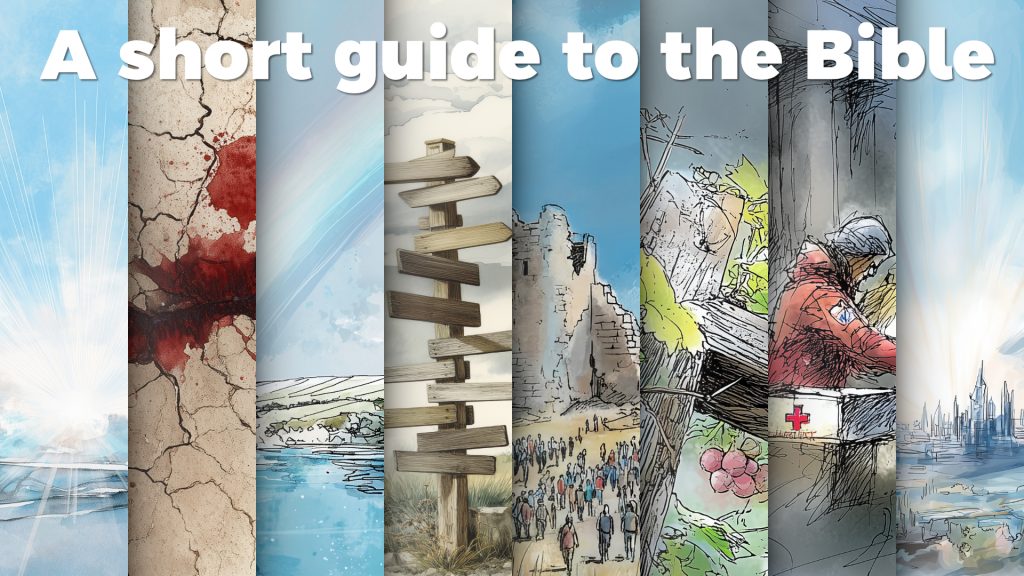
Artwork for a talk series by Claire Lynch at Severn Church, Bristol.
How can the big story of the Bible be shared briefly, meaningfully and memorably?
I’m happy to be part of a church that enjoys doing this creatively and keeps trying to do it as well as possible. The Bible is important to us because we trust that it comes from good sources (through people, inspired by God), and that – as one of its New Testament contributors describes – it is useful to equip us for a good life.
How that works exactly is a great question, and one we could spend ages talking about, but as my job here was just to put some pictures on a screen, let me tell you here about how I came up with them.
Claire’s source for her talk was our theologian friend Steve Burnhope, author of “How to Read the Bible Well”, and he came up with a way to view the Bible as boxset seasons. I don’t know if he did this before or after our “Boxset Binge the Bible” podcast series, but I don’t mind – I’ve always found this a helpful idea.
Claire slightly adapted Steve’s treatment to group things into three seasons – the original “Old” Testament, the gospels, and the rest of the New Testament. Each season has episodes with distinctive purposes in the big story.
I was given the titles and wanted to illustrate them as a set so that each told a story on its own, while also fitting together (somewhat – not necessarily too neatly) to show the whole boxset.
I used Midjourney in my usual way (which I’ll also write more about separately), in dialogue, starting with basic prompts, feeding in past work that had the right sort of feel, homing in on good ideas that emerged from a mass of suggestions. In total, nearly 400 images were produced on the way to making the final ones. I also, as usual, used Nano Banana Pro to edit where Midjourney’s general idea and composition was good but the details didn’t get quite the right idea or feel across. Finally, I did the captions and collage assembly in Affinity.
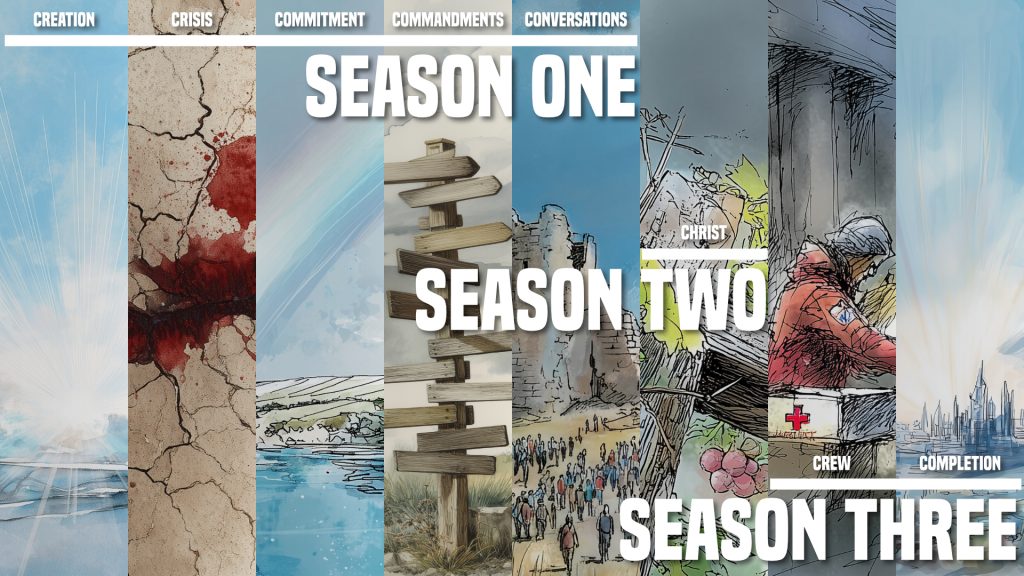
We were happy with how they came across as a set. I think AI is super useful for making stuff in a few available hours that would otherwise have taken weeks or been out of our realm of possibility. I’m going to write a lot on this site about “AI slop”, why we feel terrible about it, and how best to work in non-sloppy ways with AI, but the main thing I went for here was a style that feels illustrative rather than photographic. “Watercolour sketch” was the term I ended up liking for what Midjourney made with it.
To me, that not only avoids the yucky, uncanny valley feeling that often comes from AI’s attempts at photos, it also neatly conveys the sense of seeing the Bible as “inspired” in the sense we believe it to be – with breath in supplied by God, but with breath out (the expression we experience) from people who shared representations of what they believed they should share. We’re not seeing the Bible as if it were a modern video camera’s view on the ancient world, but as various inspired authors’ best efforts to share reality as they saw it. There’s always some style to interpret along with the substance. Now I’m struggling to explain this with words, I’m thinking that pictures do this really well!
On the individual image choices:
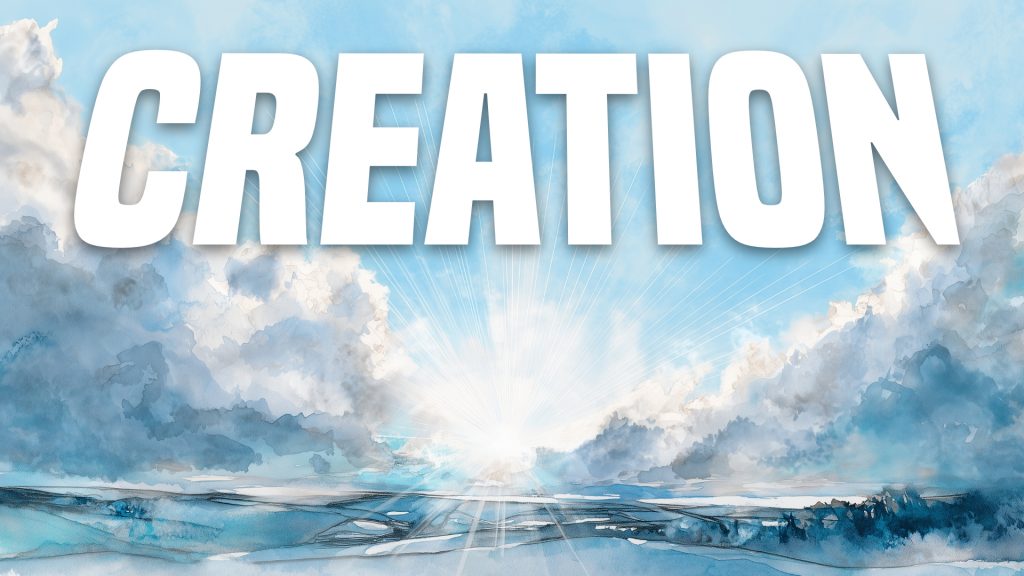
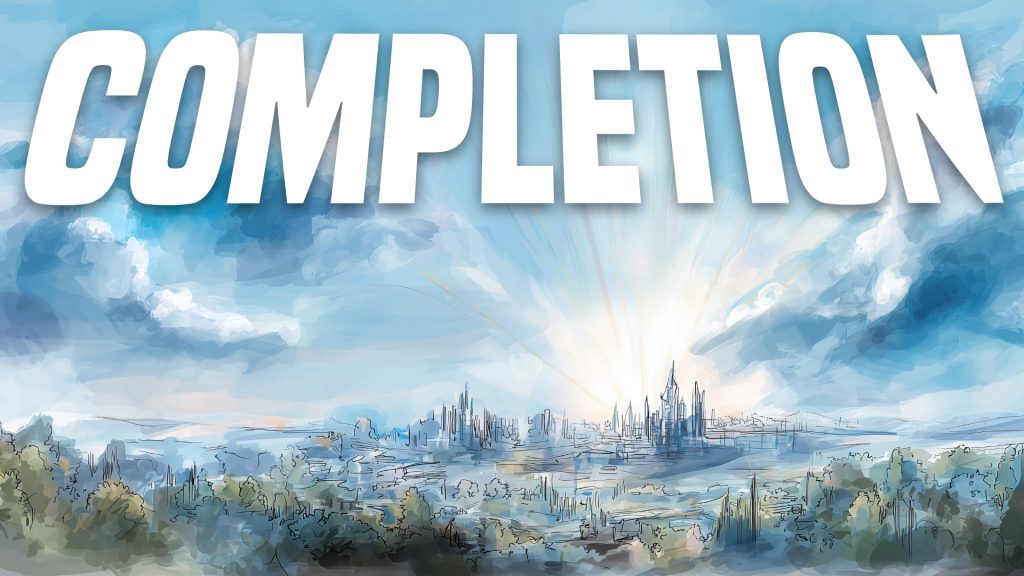
Creation and Completion: these bookend the Bible with, I believe, a statement of purpose and its fulfilment. The purpose – for us to know and live God’s expressed desire for life with us. In the most ancient civilisations, this just looked like the ordering of nature, like the ability to separate land from water so we could build and grow stuff without it getting washed away, as would happen quite a lot in the Ancient Near East. While “Creation” is a sort of epic yet pastoral image (like my impression of the beginning of Genesis), “Completion” has to show something built (the way John describes a city in Revelation). I like the way the city and nature in “Completion” seem to echo and complement each other, as if we’re looking at a coherent and sustainable world, with all kinds of creation and creativity fitting together well.
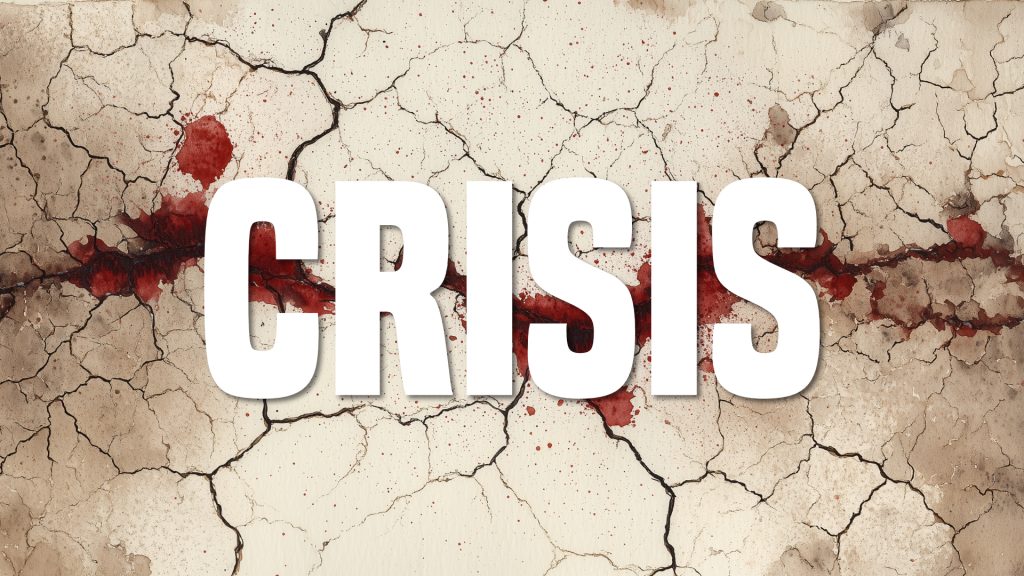
Crisis: this is meant to stand out as a significant blot on the landscape. The Bible’s crisis stories begin with rejection of faithfulness and closeness with God, the origins of relational breakage, self-centredness and evil, including the first story of murder. The blood is on a parched, cracked piece of land to include associations that ancient people had between fertile land’s life-sustaining ability and the more challenging, death-bringing conditions of the desert. But I also like the cracks in this picture. Do they just look like brokenness to you? Or are there also suggestions of connections, or rivers, or other things that could remind you of a better life? Or do I just like it because it’s like a blood-spattered version of the Eastenders title image? Probably that.
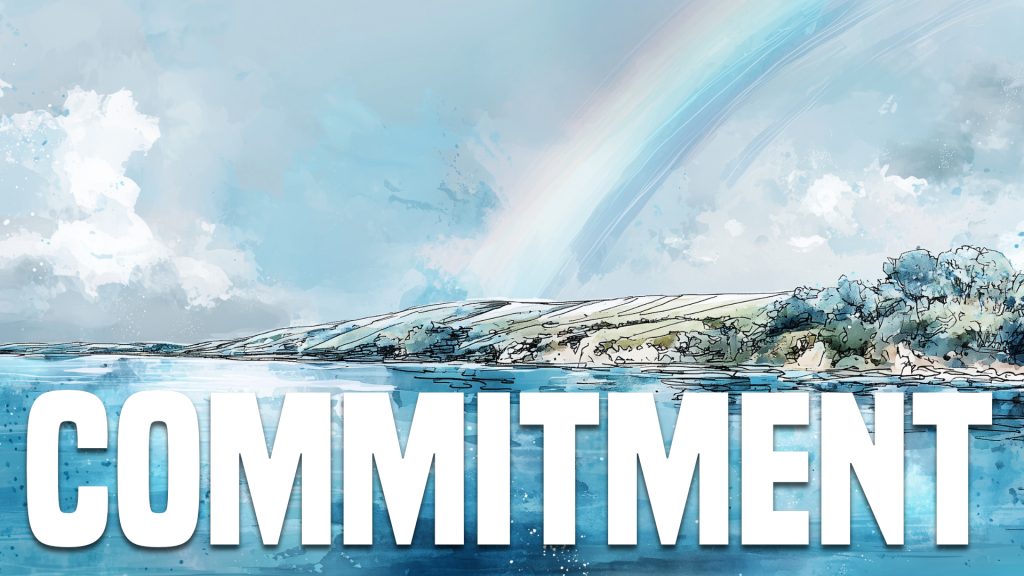
Commitment: Genesis continues with God’s first major steps in rebuilding relationships with people, including the first covenant commitment made with humanity under the sign of a rainbow. I’m writing a whole big thing about God and rainbows, so this probably tipped me towards having this as an image instead of something more related to later covenants, like the establishment of Israel, but I also saw this as a “for everyone” series, and the rainbow was the sign of a “for everyone” covenant.
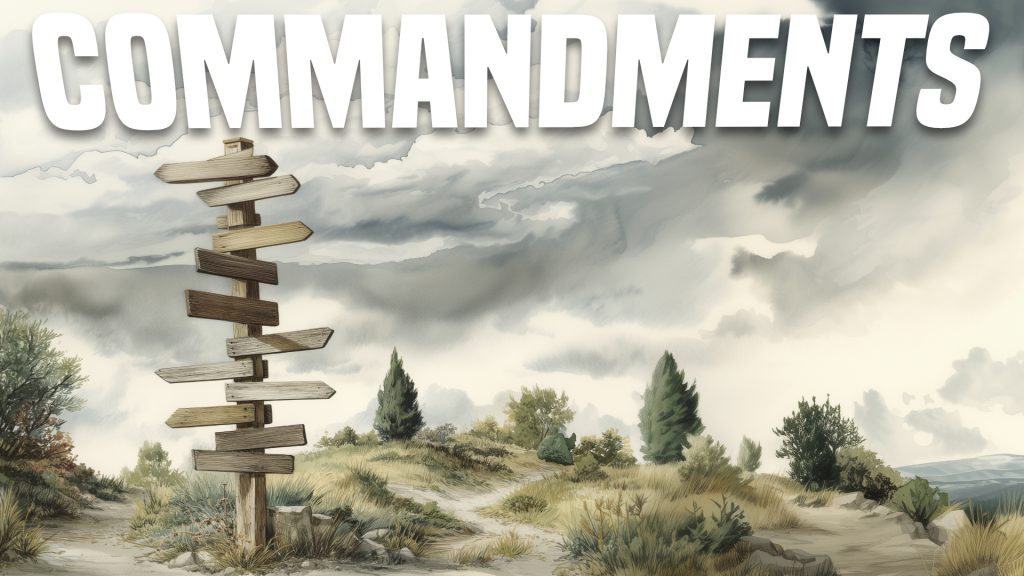
Commandments: Why not have stone tablets or scrolls here? Well, they would be super obvious and, in my view, miss a part of the message that’s being shared in the talks here. While God’s people certainly collected and cherished divinely-inspired laws – not just 10 commandments, but nearly 700 – we might want to think about how they have worked through history in practice. New Testament authors have views on this, not discounting or refuting these laws as much as reframing their purpose – I think Paul came to believe they were partly to reveal our inability to follow them as a system, and partly to point people to the way to fix this problem – Jesus. So I spent a while making this landscape with a deliberately complicated and unwieldy looking signpost. Does it look followable? I think so. But does it also look impossibly difficult? And does its wooden crossed-post structure remind you of anything else?
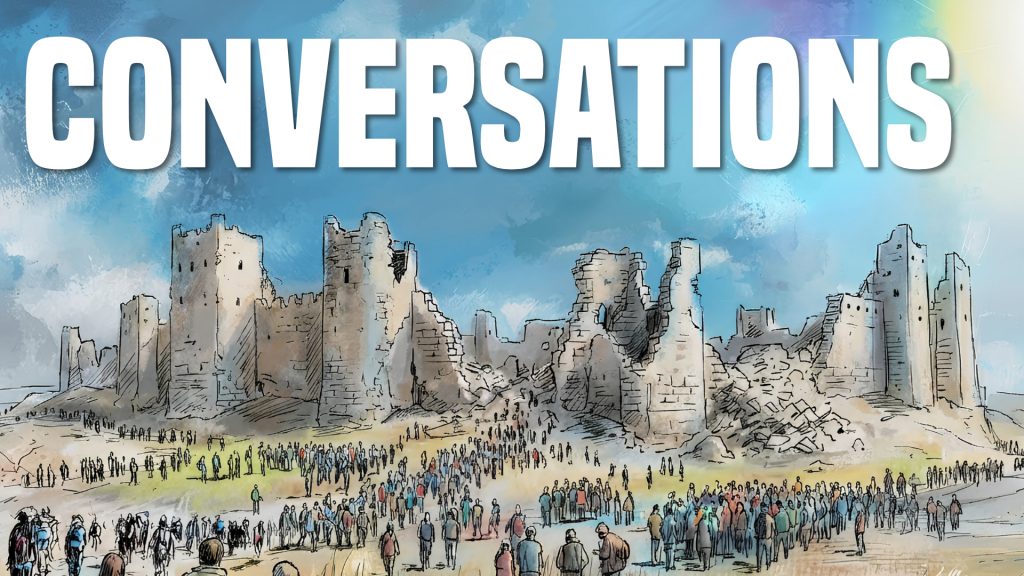
Conversations: This part of the story represents large sections of the Old Testament where God’s people suffer loss and exile, but are also encouraged by prophets to rethink, regroup and look forward to better life with God. The broken city walls are, I admit, a bit generic – they’re not an attempt to represent a particular city. I had to get a lot done with the crowds so they felt somewhat purposeful and not just touristy. Can you spot the hints of spectral colour in the top right? I wanted there to be a subtle reminder of the long-standing covenant commitments, and rainbow lighting is an actual thing in some of the prophecy. This surrounds someone who reminds me a lot of…
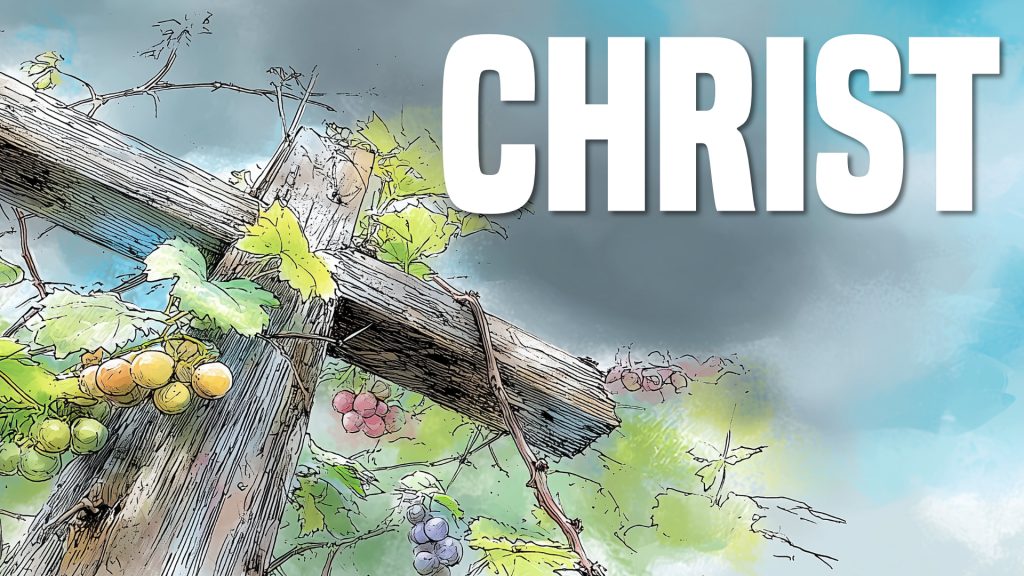
Christ: This is a distinctive season in the story, but many, many books have been written on the connections between Jesus and the promises and hopes of people who came before him. So I hope this image fits well with the others. I wanted it to show both death and life in a single image, and I drew from Jesus’ description on himself as a vine in John 15 for this. The sky’s darkness and light are also intentional, as is the lack of rainbow on this occasion (it would probably have been suitable, but seemed a bit much to repeat here!) Now I’m wondering why I haven’t seen more famous images like this. A quick Google search for ‘cross and vine paintings’ does yield some nice results, but I guess I’m still waiting for a masterpiece.
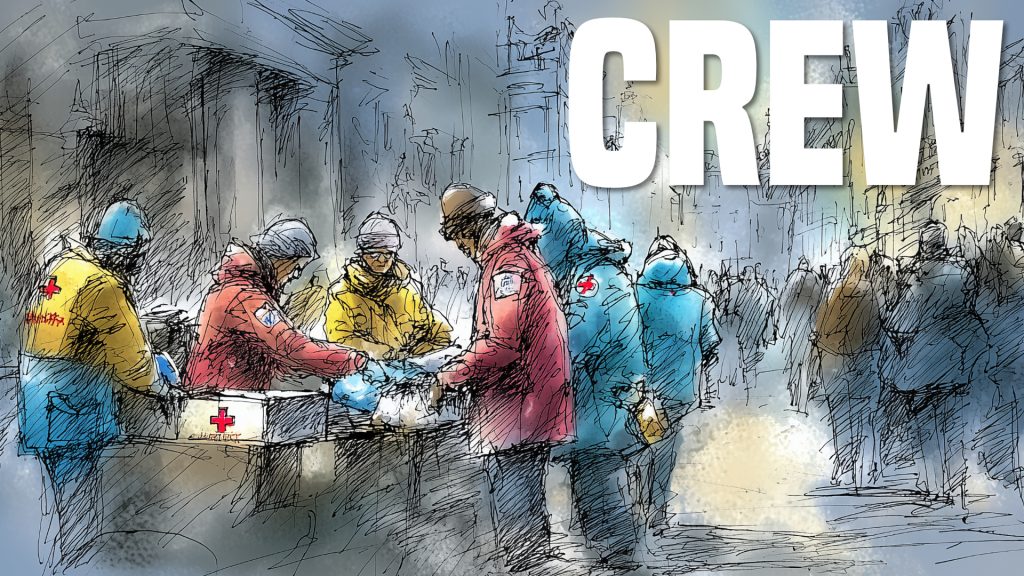
Crew: We had an interesting side discussion about this one. The original suggestion was this part of the story “Cast”, and I love Steve’s thinking on this as a way of describing our involvement with a story that we might otherwise only have been watching. It reminded me of NT Wright’s description of the Bible as a five-act play where the actors are expected to get fully, creatively involved and improvise after a point. But I found “Cast” very difficult to illustrate. Where would the suggestion of ‘stage production’ suddenly come from in a way that fit the rest of the story? On the other hand, I found it productive to illustrate people’s involvement with fixing brokenness. The “Red Cross” image came to mind, like an emergency response crew, equipped and willing to serve. So I suggested “Crew” as a title for this section, and Claire also thought this fits the story well.
This leads us back to Completion – not just an image of creation and creativity in harmony, but a realistic expectation that comes from our faith that brokenness can be overcome. This is what we believe God makes us part of – not just a heavenly hope for later, but the coming of God’s kingdom that Jesus told believers to pray for now, every day.
Claire is continuing her talk series soon, but you can see the first talk here.